
The Decision Review System (DRS) in cricket explained
Quick answer
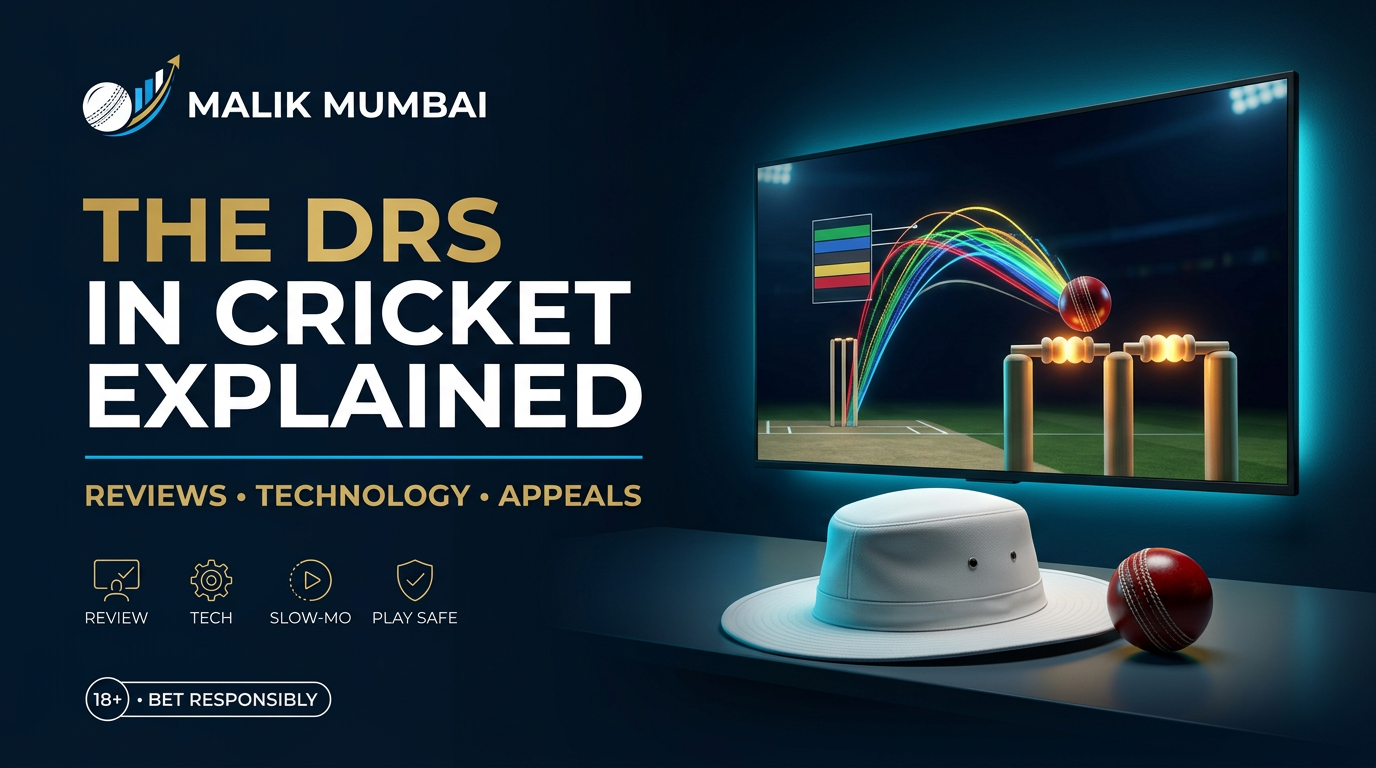
The Decision Review System lets a batter or the fielding captain challenge an on-field umpire's decision. The third umpire then checks it using replays, ball-tracking and edge-detection technology. Each team has a limited number of unsuccessful reviews per innings, so knowing when to use one is part of the game.
Key takeaways
- How does a DRS review work? After an on-field decision, the batter or fielding captain makes a T shape with their hands.
- What technology does DRS use? Ball-tracking, which projects the ball's path for LBW decisions.
- What does umpire's call mean? When ball-tracking shows the ball only clipping the stumps or the line, the evidence is too thin to overturn the original decision.
- How is an LBW checked on review? Ball-tracking answers three questions in order.
- How long does a player have to ask for a review? Under ICC playing conditions, 15 seconds from the on-field decision.
How does a DRS review work?
After an on-field decision, the batter or fielding captain makes a T shape with their hands. The third umpire studies the replays and technology and tells the on-field umpire whether to keep or overturn the call.
What technology does DRS use?
- Ball-tracking, which projects the ball's path for LBW decisions.
- Edge detection such as UltraEdge, which uses sound to show whether the ball touched the bat.
- Slow-motion replays from several camera angles.
- Thermal imaging such as Hot Spot, in some series.
What does umpire's call mean?
When ball-tracking shows the ball only clipping the stumps or the line, the evidence is too thin to overturn the original decision. The on-field call stands, and the reviewing team keeps its review.
How is an LBW checked on review?
Ball-tracking answers three questions in order. Did the ball pitch outside leg stump? If it did, it can't be out. Did it hit the pad in line with the stumps, unless the batter offered no shot? Would it have gone on to hit the stumps?
Only when all three point to out does the third umpire give it, and marginal answers on the last two fall into umpire's call.
How long does a player have to ask for a review?
Under ICC playing conditions, 15 seconds from the on-field decision. That is why captains consult the bowler and keeper so quickly, and why a review signalled after a long chat can be refused.
Where did DRS come from?
It was first trialled in a Test series between India and Sri Lanka in 2008 before becoming part of international playing conditions. Ball-tracking and sound-based edge detection now do most of the work.
How does DRS affect live betting?
- Markets are usually suspended during a review and reopen at new prices once the decision is final.
- An overturned wicket can swing session and match prices sharply, so avoid betting while a review is running.
- A side with no reviews left is more exposed to a wrong decision late in an innings.
- Settlement follows the final decision after any review, not the first signal on the field.
Our live betting tips cover how in-play prices react to moments like these.
Frequently asked questions
Short answers to the questions this guide raises most.
Who can ask for a DRS review?
The batter who was given out, or the fielding captain after a not-out decision.
How many reviews does each team get?
A limited number of unsuccessful reviews per innings. The exact number depends on the format and competition rules.
Does a team lose a review on umpire's call?
No. The team keeps its review when the result is umpire's call.
How long does a team have to ask for DRS?
15 seconds from the on-field decision under ICC playing conditions.
Can an LBW be given if the ball pitched outside leg stump?
No. A ball pitching outside leg stump can't produce an LBW.
Still unsure? Ask our team
Sources and official references
Check rules, fixtures and figures with the bodies that publish them.
- Playing conditions for international cricketInternational Cricket Council
- Scorecards, records and ground statisticsESPNcricinfo
- ICC team and player rankingsInternational Cricket Council
- Tele-MANAS free mental health helpline (14416)Ministry of Health and Family Welfare
18+ only. Betting carries real financial risk and no tip or guide guarantees a result. Check the law where you live, and read our responsible gambling guide if betting stops being fun.
About the author
Priya NairInternational Analyst
Covers bilateral series and ICC events, with a focus on pitch analysis and conditions-based betting angles.
More from Priya →Related reading
Cricket
Ball-by-ball betting explained: the fastest cricket market
How ball-by-ball cricket betting works: what you are betting on, how wides, no-balls and free hits affect it, and why stream delay is so costly.
· 2 min read
Cricket
Cricket betting market types, plus lagai, khai and lambi explained
Every common cricket betting market explained, plus the Indian terms lagai, khai, session and lambi, what fancy means and which market suits your view.
· 3 min read
Cricket
Cricket betting exchanges: back, lay and liability explained
How a cricket betting exchange works: backing and laying, how lay liability is calculated, how prices move in play, and what to check before you bet.
· 3 min read